


Beds or equipment alone rarely constrain healthcare delivery. In many hospitals, the true bottleneck is workforce alignment: having the right clinicians, with the right skills, available at the right time. When staffing levels fail to match real-world demand, patient wait times increase, clinicians burn out, and operational costs rise.
Smart rostering addresses this challenge by replacing static schedules with data-driven, adaptive workforce planning. By aligning clinical capacity with patient demand, hospitals can improve efficiency, safety, and staff satisfaction simultaneously.
The Hidden Bottleneck in Healthcare Operations
Patients sitting in waiting rooms often assume a lack of beds or clinicians causes delays. In reality, many hospitals experience delays even when physical capacity exists. The issue lies in timing and coordination.
Patient arrivals do not distribute evenly. Emergency departments experience surges, ward acuity fluctuates, and cancellations, late arrivals, and downstream bottlenecks affect outpatient clinics. Traditional rostering systems struggle to adapt to this variability, leaving clinical teams either overwhelmed or underutilised.
This mismatch creates what healthcare leaders increasingly recognise as a workforce timing bottleneck; a situation where staffing supply does not align with real‑time demand. Smart rostering solves this by continuously aligning clinical capacity with patient flow.
Why Manual Scheduling No Longer Works
Despite advances in digital health, many healthcare organisations still rely on manual or semi‑manual rostering methods. Whiteboards, spreadsheets, and email chains remain common in wards and departments worldwide.
These approaches present several risks:
- Limited visibility: Static schedules provide no real‑time view of workforce gaps or emerging risks.
- High error rates: Manual processes are vulnerable to data entry errors, missed updates, and version control issues.
- Skill blindness: Traditional rosters focus on filling shifts, not ensuring the right clinical expertise is present.
- Administrative burden: Senior clinicians spend excessive time negotiating coverage instead of delivering care.
One of the most dangerous outcomes is “ghost staffing”- where a roster appears compliant on paper but lacks the experience or credentials required for complex cases. A ward may be fully staffed numerically, yet unsafe in practice.
DC2Vue Smart rostering replaces this fragile infrastructure with a single, live workforce system that reflects reality as it unfolds.
From Reactive to Predictive Workforce Planning
Modern healthcare cannot afford to operate on hindsight. Smart rostering platforms use predictive analytics to anticipate patient demand before it materialises.
These systems combine multiple data streams, including:
- Historical demand patterns: Seasonality, day‑of‑week trends, and known activity cycles
- External signals: Public holidays, local events, infectious disease trends
- Live operational data: Admissions, discharges, transfers, and acuity changes
Importantly, predictive rostering does not focus solely on patient volume. It incorporates patient acuity, recognising that workload intensity varies significantly depending on clinical complexity. Five low‑acuity patients require a very different staffing response than five high‑acuity cases.
By forecasting both volume and intensity, smart rostering enables healthcare leaders to plan staffing proactively, reduce last‑minute overtime, and maintain safe care standards during demand surges.
Auto‑Roster Settings: Turning Demand Forecasts into Actionable Schedules
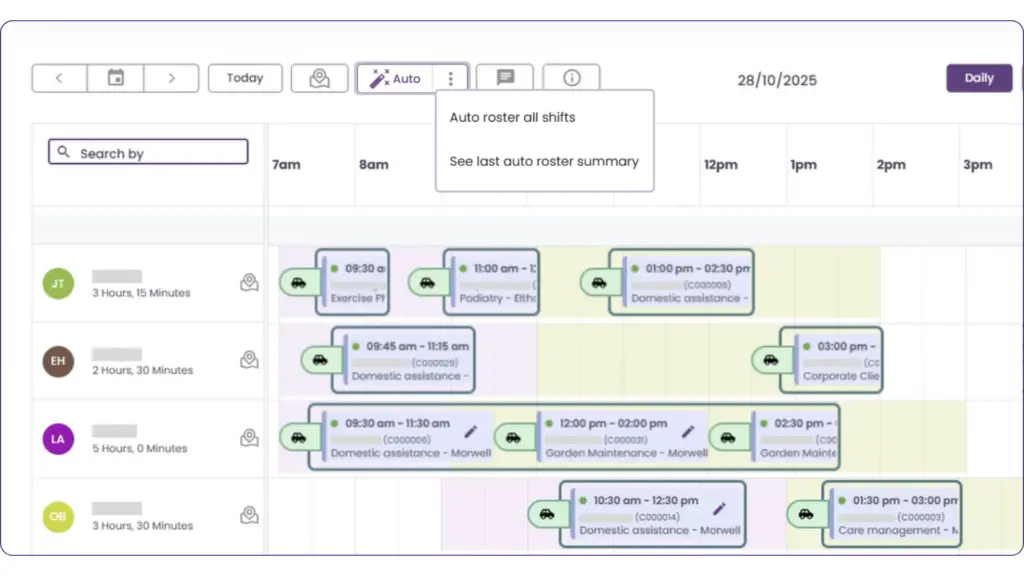
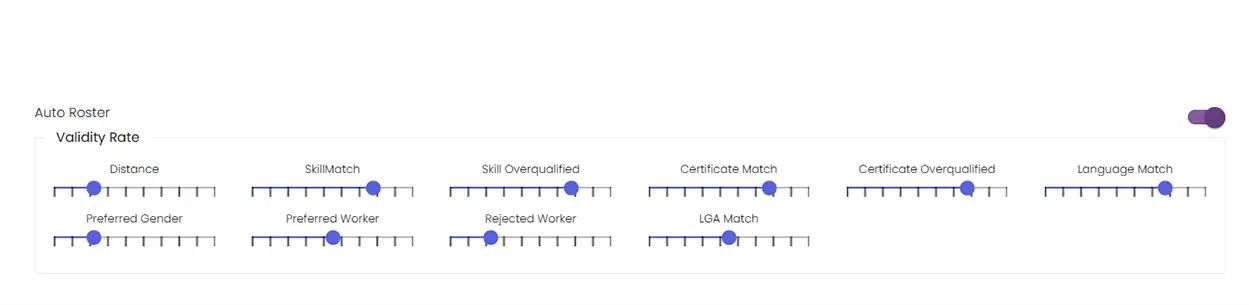
DC2Vue’s Auto‑roster settings allow healthcare organisations to automatically generate schedules based on defined rules such as skills, availability, workload thresholds, and compliance requirements. This addresses the operational challenge of manually adjusting rosters every time demand fluctuates. By embedding intelligence directly into the scheduling process, leaders can ensure consistent coverage during peak periods while reducing last‑minute changes. The result is improved workforce efficiency, stronger compliance, and safer staffing decisions made ahead of time rather than under pressure.
Skill‑Based Rostering: Moving Beyond Headcount
Efficiency in healthcare is not achieved by numbers alone. The composition of the clinical team matters just as much as its size.
Smart rostering systems evaluate each staff member’s clinical seniority, specialty skills, certifications, and scope of practice. This enables skill‑based rostering, where shifts are constructed to ensure the correct mix of leadership, specialisation, and support.
Automated credential tracking further strengthens safety by preventing staff with expired or missing certifications from being allocated to restricted roles. This reduces clinical risk while removing the administrative burden of manual compliance checks.
Clinic and Location‑Based Scheduling: Aligning Staff to the Right Place
DC2Vue’s clinic and location‑based scheduling enables healthcare organisations to assign clinicians to specific clinics, departments, or physical locations based on service demand and required competencies. This solves the common problem of staff being scheduled without clear alignment to where care is delivered. By linking workforce availability directly to clinic operations, healthcare providers gain better visibility into coverage gaps and reduce the risk of misallocation. This ensures patients are supported by the right teams, in the right place, at the right time.
Improving Patient Safety Through Workforce Alignment
Patient safety is directly influenced by staffing decisions. Overstretched teams, skill gaps, and fatigue increase the risk of adverse events, medication errors, and delayed interventions.
Smart rostering improves safety by:
- Ensuring appropriate nurse‑to‑patient ratios based on acuity
- Preventing unsafe fatigue patterns through enforced rest rules
- Maintaining continuity by reducing reliance on unfamiliar agency staff
When staffing aligns with demand, care delivery becomes calmer, more controlled, and more reliable. Clinicians are better able to observe subtle changes in patient condition, communicate effectively during handovers, and respond promptly to deterioration.
Addressing Burnout Through Workforce Empowerment
Burnout has become one of the most pressing challenges in healthcare. While workload is a contributing factor, lack of control over schedules is a significant driver of dissatisfaction and attrition.
Smart rostering platforms restore autonomy by enabling self‑service shift swapping, preference‑based scheduling, and mobile access for real‑time schedule management. AI‑driven fatigue monitoring further protects staff by identifying unsafe scheduling patterns before harm occurs.
Mobile Check‑In and Check‑Out: Real‑Time Workforce Visibility
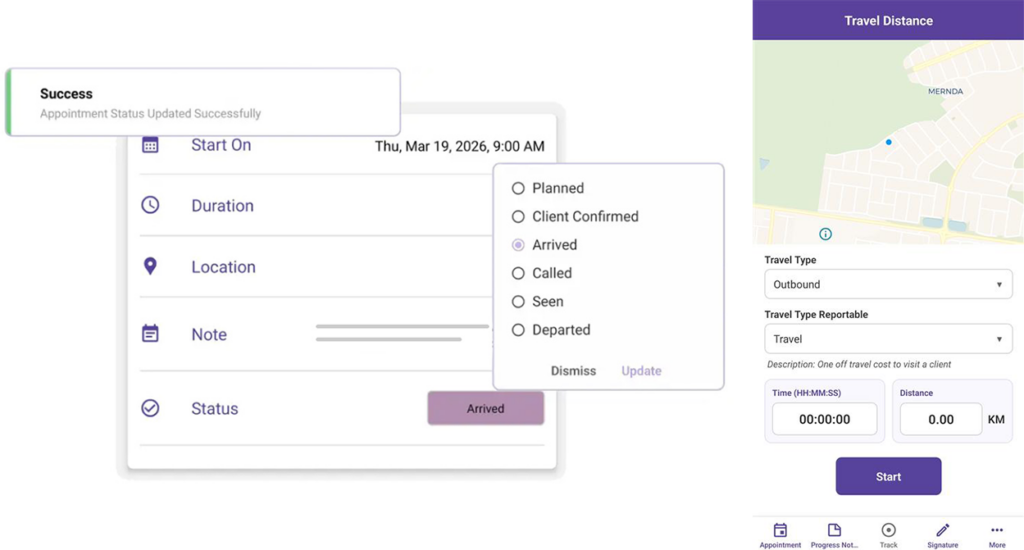
The DC2Vue Go mobile app enables clinicians to check in and check out of shifts in real time, providing accurate visibility into workforce presence across clinics and locations. This solves the operational issue of relying on assumed attendance or delayed manual updates. Real‑time confirmation improves staffing accuracy, supports compliance, and enables faster response when unexpected gaps occur. For managers and clinicians alike, this visibility reduces uncertainty while supporting safer and more accountable care delivery.
Built‑In Compliance and Risk Management
Healthcare workforce planning operates within complex regulatory and industrial frameworks. Smart rostering systems embed compliance rules directly into scheduling logic, automatically enforcing labour laws, rest periods, union agreements, and internal safety policies.
By preventing violations at the point of scheduling, organisations reduce exposure to penalties, grievances, and patient safety incidents transforming compliance from an administrative burden into a built‑in safeguard.
Financial Sustainability Through Smarter Staffing
Labour represents the largest operating cost for most healthcare organisations. Inefficient rostering leads to avoidable expenses, including:
- Excessive overtime
- Premium agency staffing
- Last‑minute coverage costs
- Penalties for non‑compliance
Smart rostering improves financial performance by forecasting gaps early and prioritising internal coverage before external escalation. This reduces agency reliance while preserving team familiarity and care quality.
Over time, improved workforce efficiency allows organisations to redirect savings toward permanent staffing, clinical innovation, and patient‑facing improvements.
What Patients Experience When Rostering Works
For patients, the impact of smart rostering is immediate and tangible:
- Shorter wait times
- Faster access to appropriately skilled clinicians
- More attentive, less rushed care
- Safer transitions between shifts
Behind every smooth patient journey is a workforce that has been thoughtfully planned and supported.
Take the Next Step with DC2Vue
Smart rostering is not just about filling shifts it is about creating a workforce that is safe, sustainable, and aligned with patient demand. DC2Vue helps healthcare organisations move beyond reactive scheduling toward intelligent, data‑driven workforce planning.
By combining predictive demand modelling, skill‑based rostering, fatigue management, and real‑time visibility, DC2Vue enables leaders to make confident staffing decisions every shift, every day.
Ready to streamline your operations? Get in touch today.